


By Alexander Frey · 5 min. read · Last updated: 5/6/2026
Introduction
Rhythm games are a captivating genre of interactive entertainment in which players must demonstrate their sense of rhythm through music-based gameplay. In these games, participants are required to synchronize their actions with the rhythm of the music by pressing buttons or using motion controls at specific moments in the musical composition.
Characteristics of Rhythm Games
Rhythm games typically simulate dance routines or the playing of musical instruments, requiring players to align their actions precisely with the beats and melodies of the selected music. The core of the gameplay often involves pressing the correct keys or buttons in a rhythmic sequence, either on a controller or through motion-based interactions.
Origins in the Arcade Era
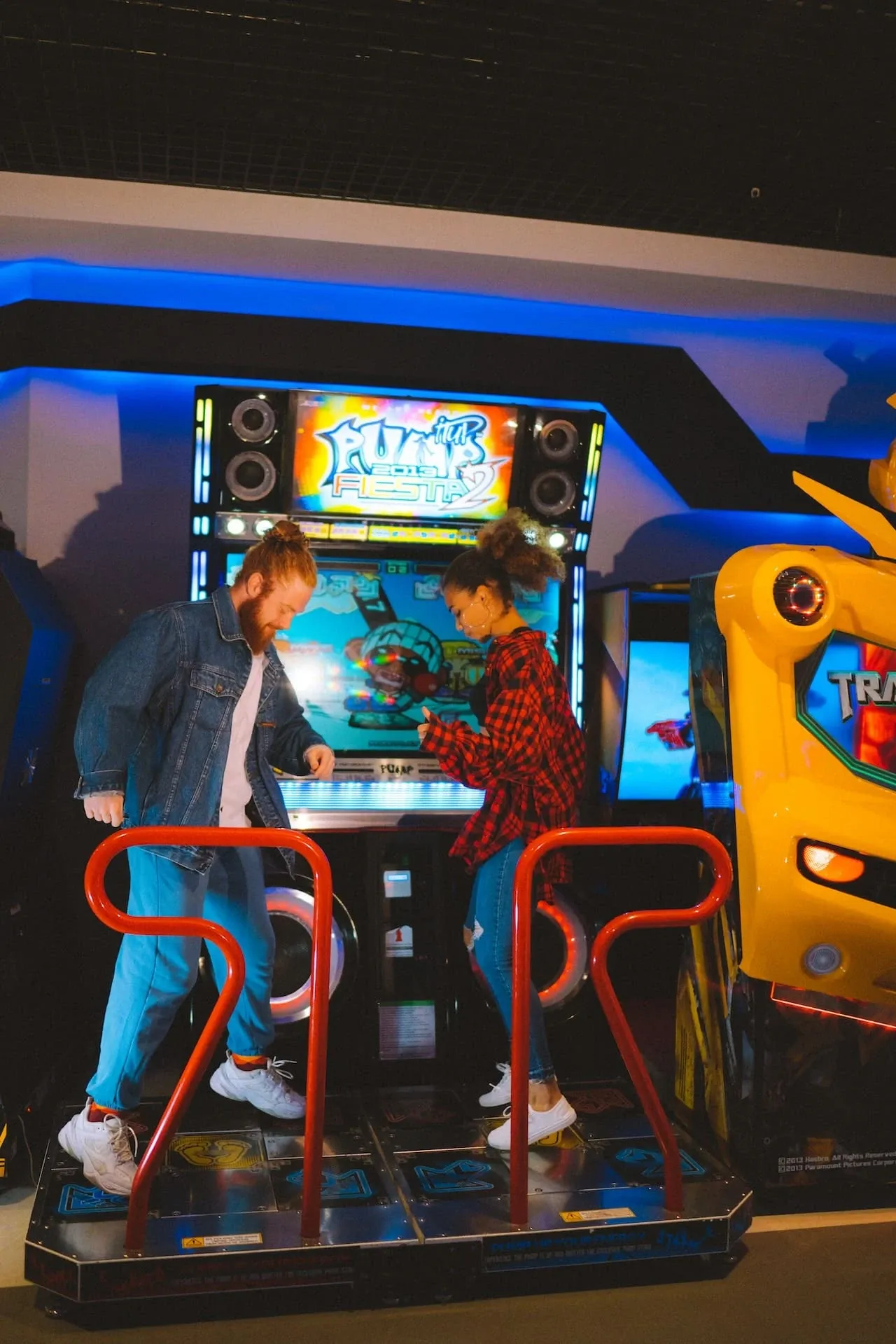
The roots of rhythm games can be traced back to the arcade era, where players performed physically demanding interactions with game platforms. Arcade rhythm games often required players to rhythmically press interactive surfaces on a floor-based platform. While modern rhythm games have evolved to support home consoles and PC, the essence of the arcade experience can still be replicated with dedicated dance mat controllers.

Rhythm games have their origins in the arcade
Notable Examples of Rhythm Games
This section introduces a selection of well-known rhythm games that have gained widespread recognition and popularity among players around the world.
Dance Dance Revolution
One of the most iconic rhythm games is "Dance Dance Revolution", which launched in Japan in 1998 and in America and Europe in 1999. Players stand on a platform with colored arrows and must step on the corresponding arrows at precise moments to achieve a high score. The game displays the arrows on a screen scrolling from bottom to top, and players must time their footwork accurately to hit the arrows as they align with target markers on the screen.
Osu!
Released for PC in 2007, "Osu!" is characterized by its minimalist graphics, though the challenges it presents should not be underestimated. The game features elements such as "Hit Circles", "Sliders", and "Spinners" that players must interact with using their mouse. Each element appears progressively on screen, and players must click, drag, or spin their mouse accordingly. The game offers varying difficulty levels set to a wide range of music tracks. "Osu!" is best played with a graphics tablet for optimal precision.
The "Guitar Hero" Series
Developed by Harmonix Music Systems, the "Guitar Hero" series made its debut in 2005 on the PlayStation 2, letting players step into the role of a rock star. The game features a guitar-shaped controller, and players must press the correct buttons in time with the music. The series boasts an extensive catalog of rock and metal songs, which was further expanded in later entries and spin-offs.
Beat Saber
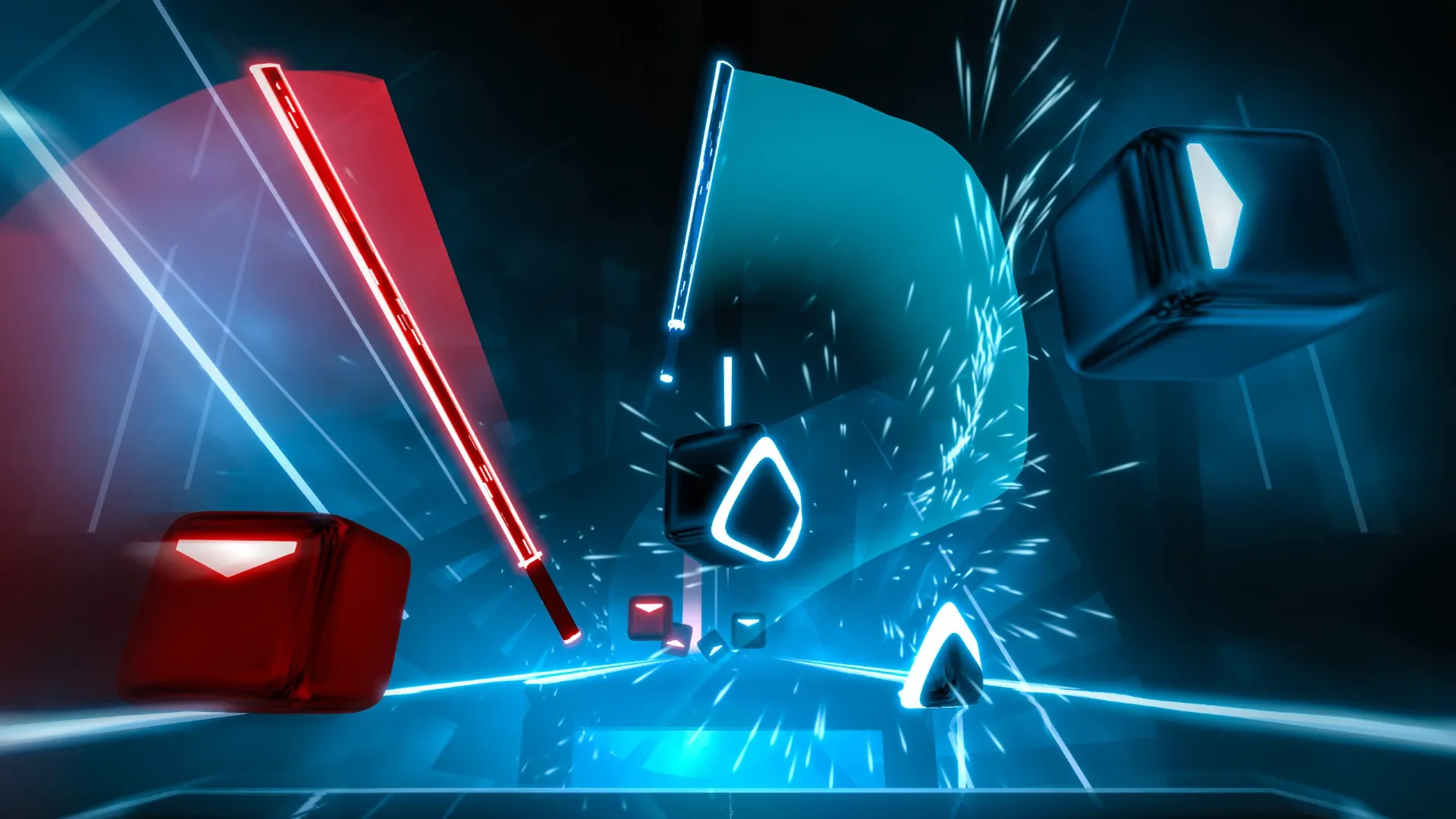
A standout virtual reality (VR) game, "Beat Saber" has earned widespread acclaim in recent years. Players wield two controllers aptly named "Beat Sabers" and must slice incoming blocks from the correct direction in time with the music. The game offers immersive gameplay and intricate song arrangements that captivate players in a fully immersive VR environment.

Beat Saber is a well-known VR rhythm game
Conclusion
Rhythm games hold a prominent place in gaming history. Rooted in the arcade era, they continue to captivate fans with their music-driven gameplay. Notable titles like "Beat Saber" have successfully revived interest in the genre and brought it back into the mainstream. Both enthusiasts and newcomers are encouraged to explore the rhythmic challenges these engaging games have to offer — a unique and entertaining gaming experience unlike any other.
More articles

Game Development
Game Design Tips: 8 Strategies for Successful Game Development
8 practical game design tips for better games: from storytelling to social media – for indie developers and studios.

Game Development
Source Engine: History, Features & Technology of Valve’s Game Engine
An overview of Valve’s Source Engine: its origins, technologies, features, and its role in games like Half-Life, Portal, and CS:GO.
Ready to get started?
Let’s start your project.
We appreciate your interest in working with us. Whether you have an idea, a proposal, a question, or need assistance in another area, we’ll get back to you quickly—within 24 hours.
Free initial consultation
Response within 24h
No commitment
Contact
Opening Hours
Mon – Fri, 9:00 – 17:00Response Time
Within 24 hours