

Game Development
Game Design Tips: 8 Strategies for Successful Game Development
8 practical game design tips for better games: from storytelling to social media – for indie developers and studios.
Alexander Frey

Gamification
Gamification in marketing turns passive viewers into active users. We show how brands like Starbucks, Nike, and Duolingo use it to win attention and loyalty.
Advertising has a problem: most people tune it out. Classic formats wash over us, while our attention is scarcer and more contested than ever. This is exactly where gamification in marketing comes in. Instead of just sending messages, it actively involves the audience. Those who take part themselves, who click, collect, or master a challenge, engage far more deeply with a brand than those who merely watch.
At its core is a simple psychological truth: active participation creates stronger memories and emotions than passive consumption. Gamified content feels more alive, is fun, and sticks. That is precisely why the approach keeps gaining importance in the advertising industry.
Several well-known campaigns show how effective gamification can be.
Pokémon Go became not only a gaming hit but also a marketing platform. Through sponsored locations, so-called spots, restaurants and shops could be integrated in a targeted way. Players gathered there to collect virtual items and, along the way, became real foot traffic.
Starbucks uses gamification consistently in its app. A points system rewards every order with "Stars" that can be redeemed for discounts, free products, or exclusive offers. This not only strengthens brand loyalty but also demonstrably increases customers' willingness to spend.
Nike Run Club turns running into a game. Challenges, badges, virtual competitions, and personal statistics awaken competitive spirit and bind users emotionally to the brand, day after day.
Duolingo is considered a prime example: progress bars, daily streaks, leaderboards, and virtual currencies keep users engaged. Its playful structure is now a model for anyone who wants to combine learning or information offerings with entertainment.
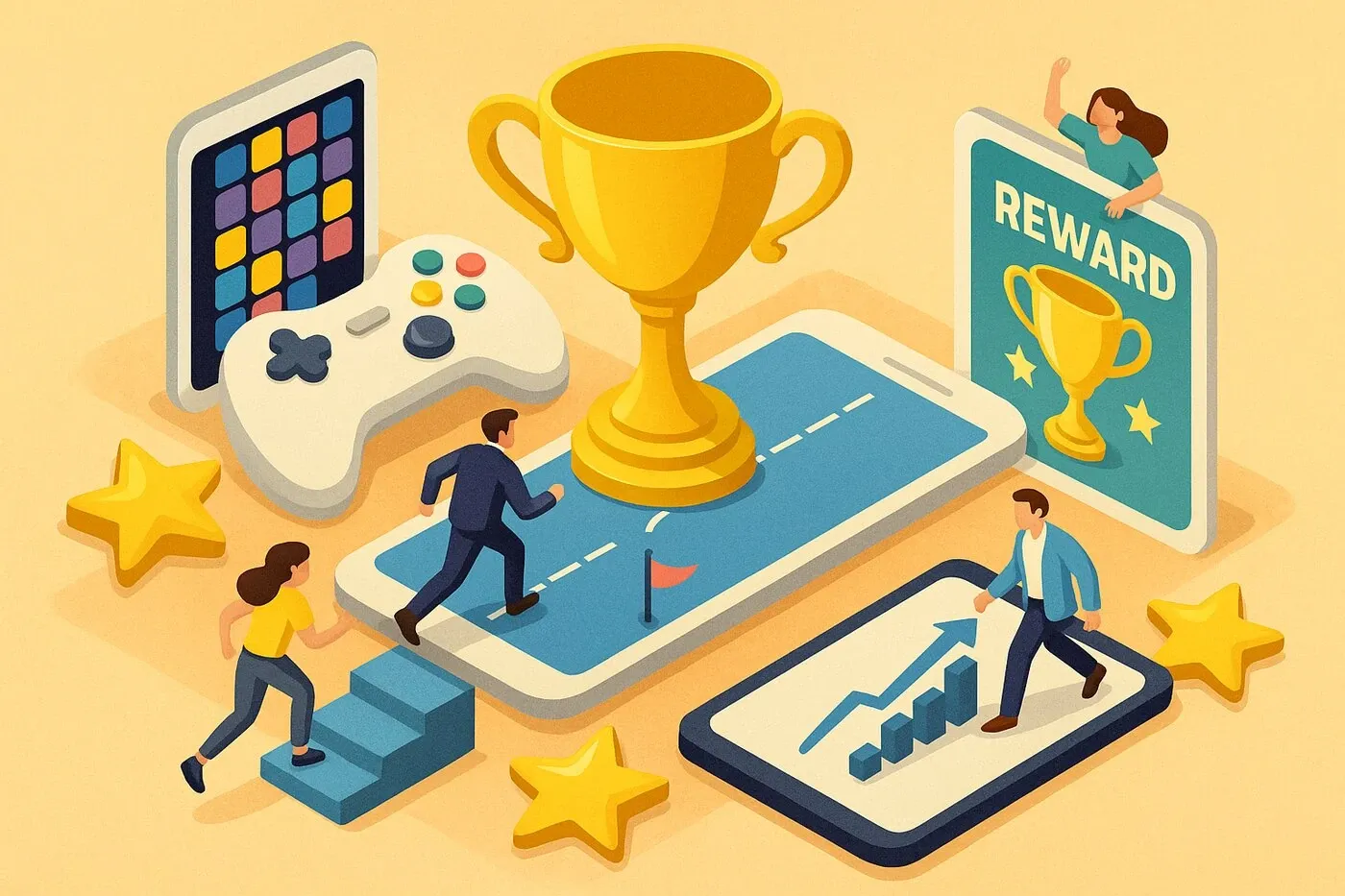 Gamification in marketing: reward systems and progress strengthen brand loyalty and user engagement
Why does this work so well? One explanation is Self-Determination Theory, which names three basic psychological needs: autonomy, competence, and social relatedness. Campaigns that serve exactly these needs trigger intrinsic motivation, a drive that comes from within the person. It is precisely this drive that influences behavior and purchasing decisions more sustainably than any pure discount campaign. Users remember brands they have actively interacted with better. And because many companies do not yet use this potential, it is a clear advantage for those who bet early on approaches grounded in behavioral psychology.
Gamification does not work automatically, though. It stands or falls with a precise audience analysis. Only those who know the needs, expectations, and behavioral patterns of their target group can develop a suitable concept. Different groups react differently: younger users often respond to reward systems and leaderboards, while working adults tend to react to challenges, status symbols, or exclusive content. Surveys, tests, and the analysis of user data help develop a tailored concept. Those who consistently align gamification with the target audience achieve not only more interaction but also long-term loyalty.
Gamification in marketing is no longer a trend but a firm part of modern brand communication, from product launch to customer loyalty. Its strength lies in its flexibility: it can be tailored individually to audience and goal. At Studio Merkas, we develop gamified campaigns, apps, and interactive experiences that turn viewers into participants. If you want to make your brand playfully tangible, let's talk about it. For how gamification works in other areas, see our article on gamification in healthcare.

Ready to get started?
We appreciate your interest in working with us. Whether you have an idea, a proposal, a question, or need assistance in another area, we’ll get back to you quickly—within 24 hours.